
Sleeving
Cells are sleeved automatically, which is what puts the printed wrap and the polarity marking on straight every time.
PUJIMAX runs assembly, testing and packaging lines at its Dongguan site, with four inspection stages between incoming material and the sealed carton.
We can share the inspection criteria and sampling plan for your model as part of the quotation.

The company has been registered in Wanjiang, Dongguan since 2014 and exhibits at the Canton Fair and HKTDC. If you want current line photos, headcount or floor area for a supplier audit, ask us and we will send the dated site record rather than a number off a marketplace profile.
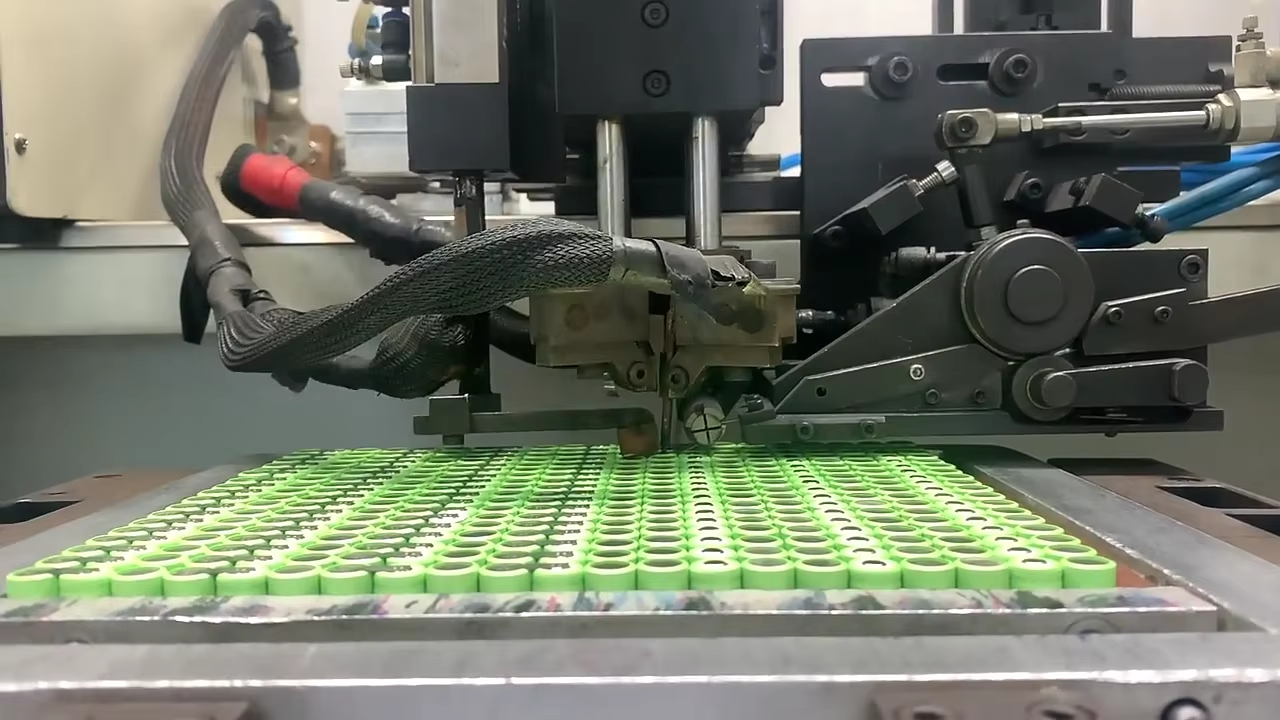
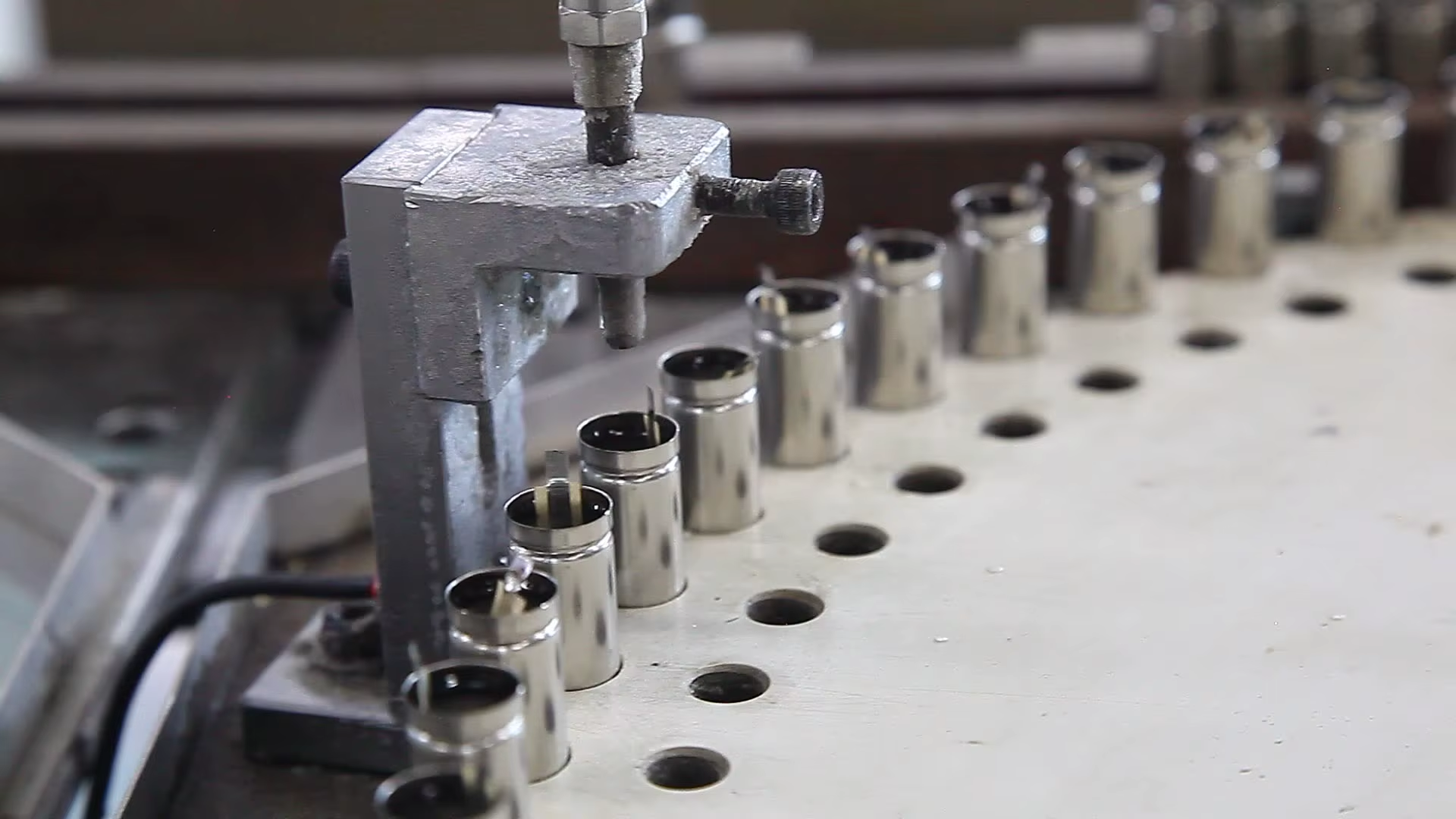
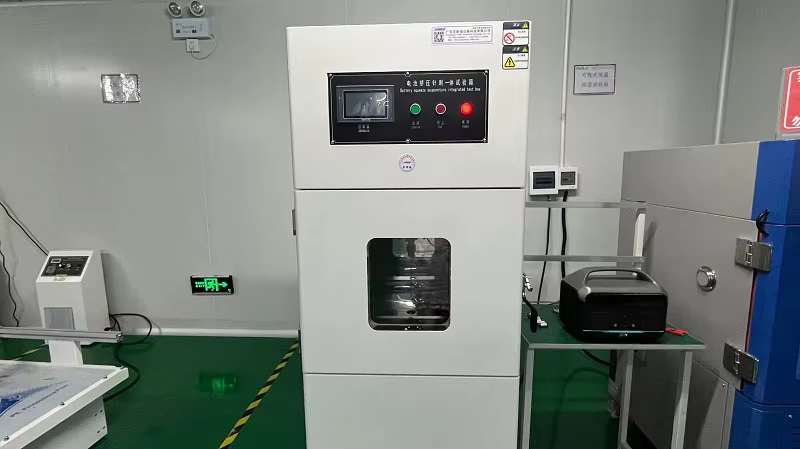
This is the battery flow at the Dongguan site. On an OEM run, step five is where your branding goes on.
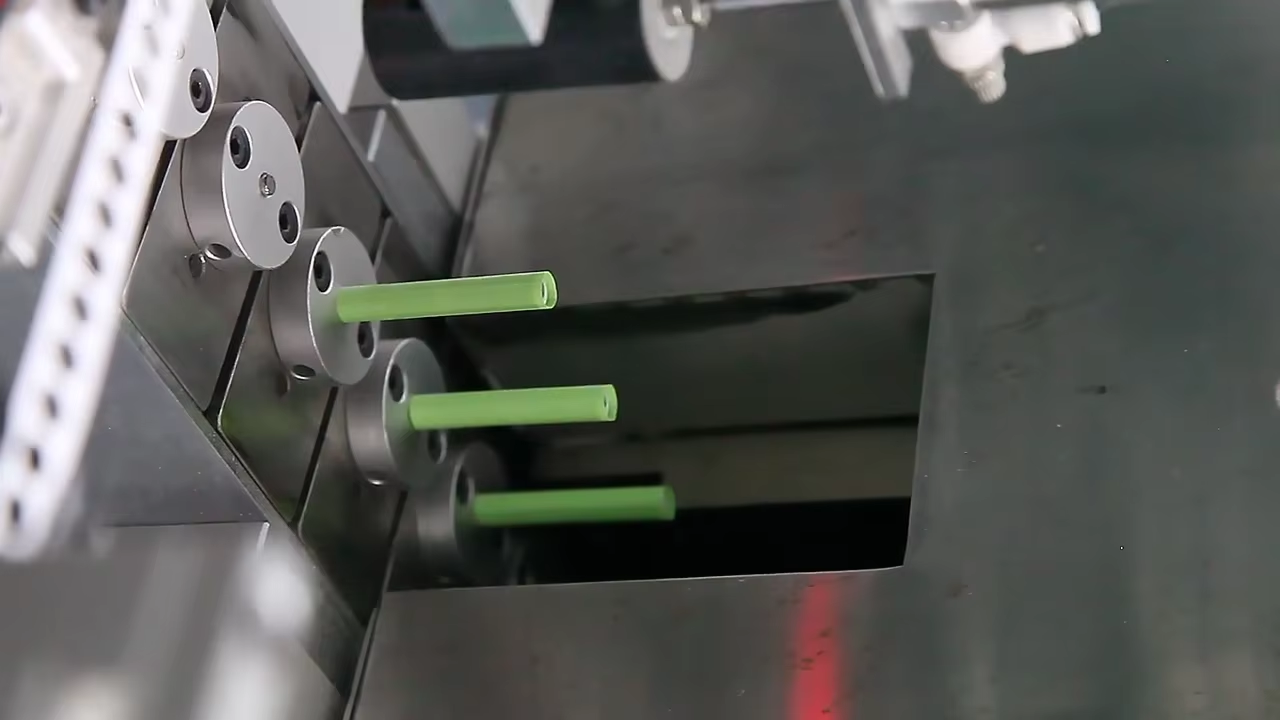
Cells are sleeved automatically, which is what puts the printed wrap and the polarity marking on straight every time.
The moulding area forms components to the shape the cell or charger housing needs.
Automatic liquid filling — the dosing step that decides whether cells in the same batch behave the same way.
Caps are seated and closed automatically, the seal that keeps the cell from leaking in a customer's device.
Parameters and logo are laser-engraved rather than printed, so the marking survives handling. This is also where your branding goes on an OEM run.
Assembly, test and packaging run as separate lines, each with its own in-line quality staff rather than a single inspection at the end.
| Production lines | Supervisors | Operators | In-line QC |
|---|---|---|---|
| Assembly line 1 | 2 | 10 | 3 |
| Assembly line 2 | 2 | 6 | 4 |
| Test line 1 | 2 | 10 | 3 |
| Test line 2 | 2 | 10 | 2 |
| Packaging line 1 | 3 | 12 | 2 |
| Packaging line 2 | 2 | 10 | 1 |
As published on our Alibaba supplier profile, captured 2026-07-25.
Listing only the equipment used on the current battery and charger flow. Older cable and hardware test rigs are not included.
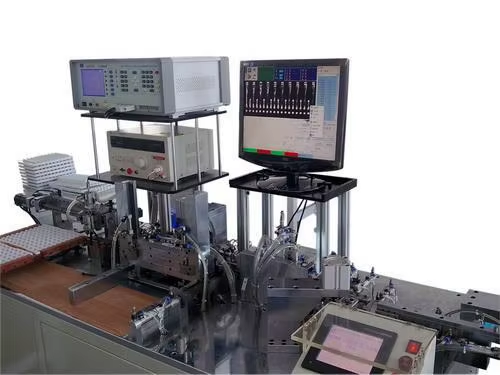
The workhorse of the test line — every cell and charger is checked against its rated output.
Full-function test of a finished charger: each slot, the display and the charge behaviour.
Measures what a charger actually delivers under load, not just what it reads at idle.
Dielectric withstand testing on mains-input chargers, the safety check before a unit is packed.
These are the stages your quality plan and inspection criteria get written against.
Cells, components and packaging checked against the approved specification.
Assembly parameters, polarity, welding and in-line function checks.
Capacity, charging behaviour and output verified against the specification.
Appearance, labelling, pack-out, sampling and shipping documents.
The exact coding method still requires company confirmation; this page shows the four buyer-facing checkpoints and deliverables.
Lock the model, revision, pack and inspection criteria.
Production and in-line checks stay attached to the lot.
Sampling, appearance and pack-out are signed off.
Specifications, declarations and transport files map to the order.
Document coverage depends on the model, the chemistry and where it ships. Here is what exists and exactly what each item covers.
Nominal voltage, capacity and test method, dimensions, temperature range, pack count and carton data for the model you select.
We hold manufacturer declarations covering our battery families and map them to your exact model and market before you order.
Type-C lithium and CR123A shipments need model-specific UN38.3 and SDS. Tell us the model and how it ships and we prepare the set.
Scope is production and sales of precision hardware stamping parts. We do not present it as a battery manufacturing certificate.
Tell us the model, destination market and transport mode and we will list the available files, gaps and preparation route in the quotation.