
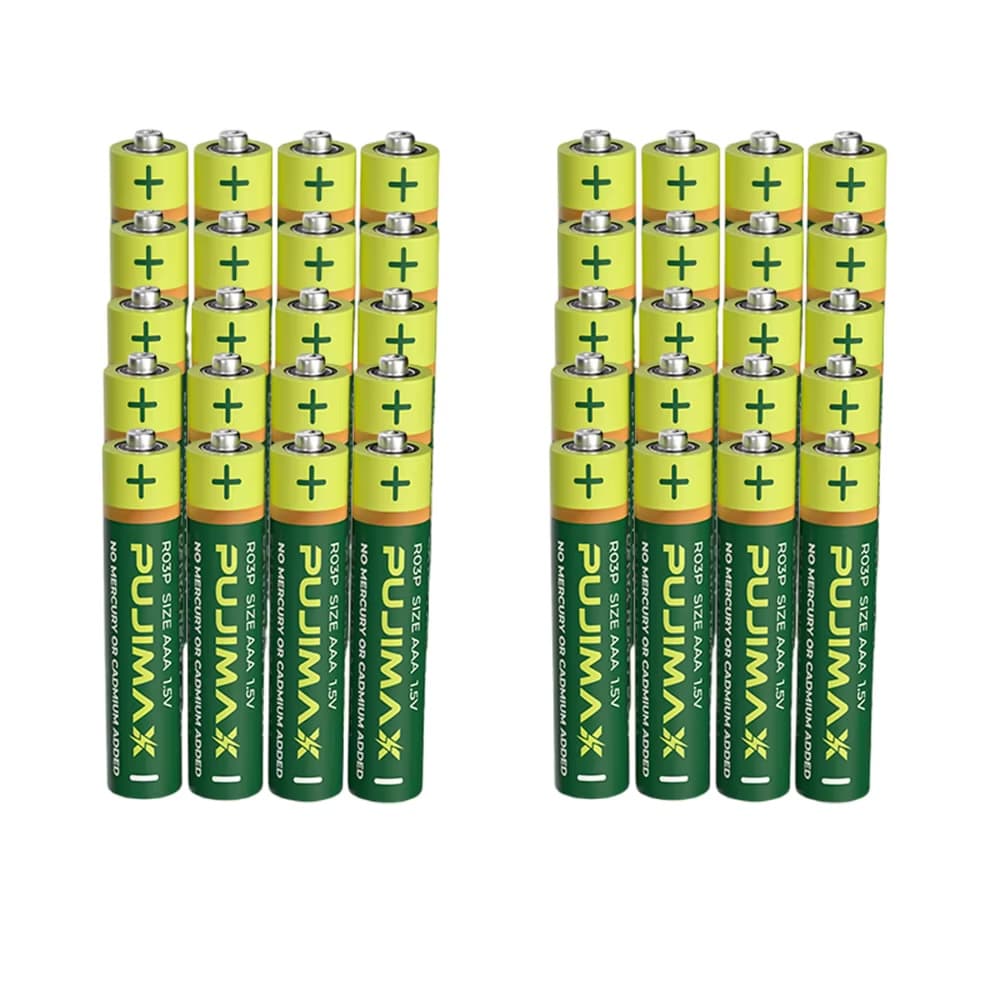
Low-drain devices run for a year or more on one set of cells, which makes self-discharge and shelf life more important than capacity. A carbon zinc or alkaline cell is often the right commercial answer for a bundled-in-the-box battery; a rechargeable set makes sense when the end user goes through several sets a year.
Voltage is the catch. A 1.2V Ni-MH cell sits below the 1.5V a device expects, and some remotes cut off early as a result. A regulated 1.5V Type-C cell avoids that, at a higher unit cost. Which one wins depends on your device's cut-off voltage, so test both.
For retail, pack size, date coding and the warnings on the back of the card matter as much as the cell inside it. Decide those with the first sample, not after the artwork is printed.
Inputs for a supplier brief
- Confirm the device voltage range and cut-off point
- Compare replacement interval against recharge frequency
- Set shelf-life and date-code requirements with the model
- Plan pack size, warnings and languages for the channel
Models we would put forward
A starting shortlist for this application. Confirm the load and cut-off behaviour in your own device before committing.